The right battery backup system is sized to the circuits you need during an outage, not to the whole house. List your critical loads, add up how much power they draw and for how long, and then choose a battery capacity and an inverter output that carry them. In Arizona, air conditioning is the deciding factor: include it and the system grows a lot.
Key takeaways
- Size to a list, not the house. Pick the circuits that must stay on, then size the battery to them.
- Two numbers matter: battery capacity sets how long loads run, inverter output sets how much runs at once.
- Watt-hours are simple math: watts times hours of use, per load, added together.
- Air conditioning changes everything in Arizona, and heat affects where the battery should live.
Table of contents
- What should stay on during an outage?
- How do you add up your loads?
- How do battery capacity and inverter output differ?
- Should you back up part of the home or the whole home?
- Does Arizona heat change the design?
- What sizing mistakes should you avoid?
- Get a battery sized to your list
- Frequently asked questions
What should stay on during an outage?
Start with a short list. Common choices in Arizona homes include:
- the refrigerator and any freezer
- a well pump or booster pump on rural property
- medical equipment such as a CPAP or oxygen concentrator
- lights, outlets for phones, and the Wi-Fi
- ceiling fans, or one cool room with a solar mini split
Medical equipment deserves a plan of its own. Ready.gov advises talking to your medical provider about a power outage plan for medical devices and refrigerated medicines. Our guide to what to do in an APS or SRP power outage covers the rest of the checklist.
How do you add up your loads?
For each item on the list, find its running watts on the label or spec sheet and estimate the hours it runs in a day. Multiply the two for watt-hours, then add everything up. For example, a 150 watt load running 10 hours uses 1,500 watt-hours, or 1.5 kilowatt-hours.
Then note two more things for each load:
- Starting surge. Pumps and compressors draw several times their running power for a moment at startup. The inverter has to cover the largest surge on the list, not just the total.
- Duty cycle. A refrigerator compressor cycles on and off, so its daily energy is far less than its wattage times 24.
The total sets the battery capacity for one day of backup. If solar recharges the battery each day, that may be enough for a long outage; without solar, multiply by the number of days you want covered.
The math behind battery runtime
Energy is power multiplied by time. Add up watt-hours for every load on your list to size the battery; the largest starting surge sizes the inverter.
- Battery capacity is the sum of every load's watt-hours, times the days you want covered without sun.
- Inverter output covers what runs at once, plus the starting surge of the largest pump or compressor.
How do battery capacity and inverter output differ?
| Number | What it decides | What drives it |
|---|---|---|
| Battery capacity | How long your loads run | Your loads and the hours you want covered |
| Inverter output | How much runs at once | The largest loads, and motor starting surge |
| Charging source | How the battery refills | Solar, the grid, or a generator plug-in |
Capacity is the size of the tank. Output is the size of the pipe. A large battery behind a small inverter cannot start a well pump, and a large inverter in front of a small battery runs out quickly. If you are weighing fuel against storage, see our generator vs battery backup comparison.
How a solar battery backup keeps your Arizona home running in an outage
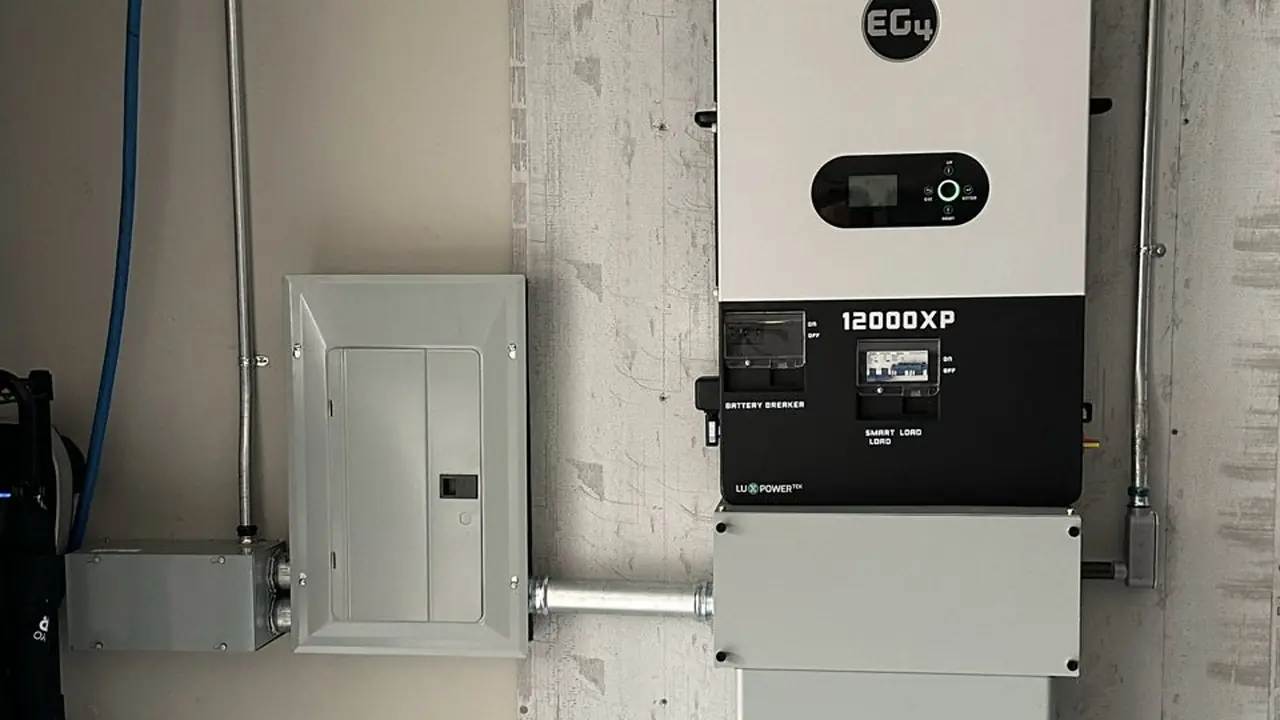
Solar panels and the grid charge the battery through a hybrid inverter. When the grid goes down, the inverter separates the home from the grid and runs the critical loads from the battery and the sun.

Solar array
Charges the battery by day.
Home battery
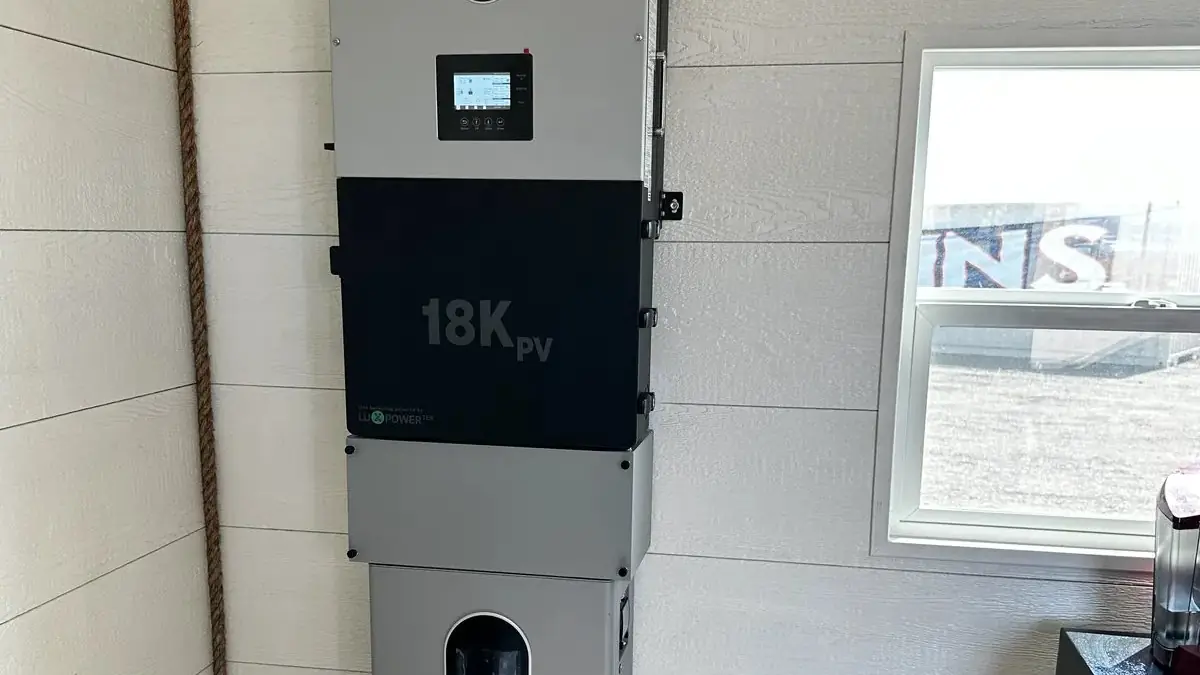
Stores energy (kWh) for the evening and for outages. Wall-mounted on a shaded exterior wall beside the garage.
Hybrid inverter
Output and surge (kW). When the grid goes down, it separates the home from the grid.
Critical-loads panel
Backup circuits the system is designed to keep on:
- Refrigerator
- Lights and Wi-Fi
- Medical devices
- Well pump
- A cool room
Utility meter
The grid connection, through the meter and main service panel on the same wall.
Should you back up part of the home or the whole home?
A partial home system puts your critical circuits on a dedicated panel. It is the most common choice because it protects what matters without sizing for central air. A whole home system carries the full service, air conditioning included, and is sized around summer peaks. Read more about both on our home battery backup page, and if your panel is crowded, our panel upgrade guide explains when it needs to change.
Does Arizona heat change the design?
Yes. Heat shortens battery life, so where the battery lives matters as much as its size. A shaded garage wall or a ventilated utility room is usually better than a west-facing exterior wall. Battery systems are installed to the fire code and to NFPA 855, the standard for stationary energy storage systems, which also shapes where they can go.
A battery also earns its place when the grid is up. On APS and SRP time-of-use plans it can cover the evening peak with stored solar; see SRP and APS on-peak hours.
What sizing mistakes should you avoid?
Most undersized systems have one of these behind them:
- Sizing only the kWh. Capacity decides how long loads run; inverter output decides how many run at once. A big battery behind a small inverter still trips.
- Forgetting starting surge. Well pumps, refrigerators and AC compressors draw several times their running power for a moment at startup.
- Adding central air at the end. Air conditioning is the largest load in most Arizona homes. Decide early whether it is on the list, because it changes the whole design.
- Ignoring heat. Summer heat shortens battery life unless the bank is placed and ventilated well, so location is part of sizing.
- Leaving no room to grow. An EV charger, a mini split or a casita added later is easier when the panel and inverter were planned for it.
- Guessing instead of reading the bill. Your APS or SRP bill shows monthly kWh, and the DOE appliance guide shows how to estimate each appliance.
Get a battery sized to your list
Ready for a number of your own? Use Build & Price and a licensed electrician will size a system around your list, or call (602) 704-4648 and send us a message with your critical loads.
Frequently asked questions
Is a bigger battery always better?
No. A battery sized far beyond your critical loads costs more and sits partly unused. Size it to the circuits you chose and the hours you want covered.
What matters more, battery capacity or inverter output?
Both. Capacity decides how long the loads run; inverter output decides how many can run at once, and whether a well pump or compressor can start.
Can a home battery run central air conditioning?
It can, but central air is usually the largest load in an Arizona home, so a system that carries it is sized around summer peaks and costs much more. Many homes cover one cool room with a mini split or fans instead.
How do I find how much power an appliance uses?
Check the label or the manufacturer's spec sheet for its watts, multiply by the hours it runs in a day, and divide by 1,000 for kilowatt-hours. Motors also need their starting surge, which is often listed separately.
Sources
- Ready.gov: Power outages
- NFPA 855: Standard for the installation of stationary energy storage systems
- U.S. Department of Energy: Watt does it cost to use it?
About the author
Nirvana Energy is an Arizona solar, battery and electrical contractor based in Gilbert, licensed and bonded under ROC 357597, CR-11 Electrical. Our own crews design and install partial home and whole home battery backup across Arizona. Learn more about Nirvana Energy.