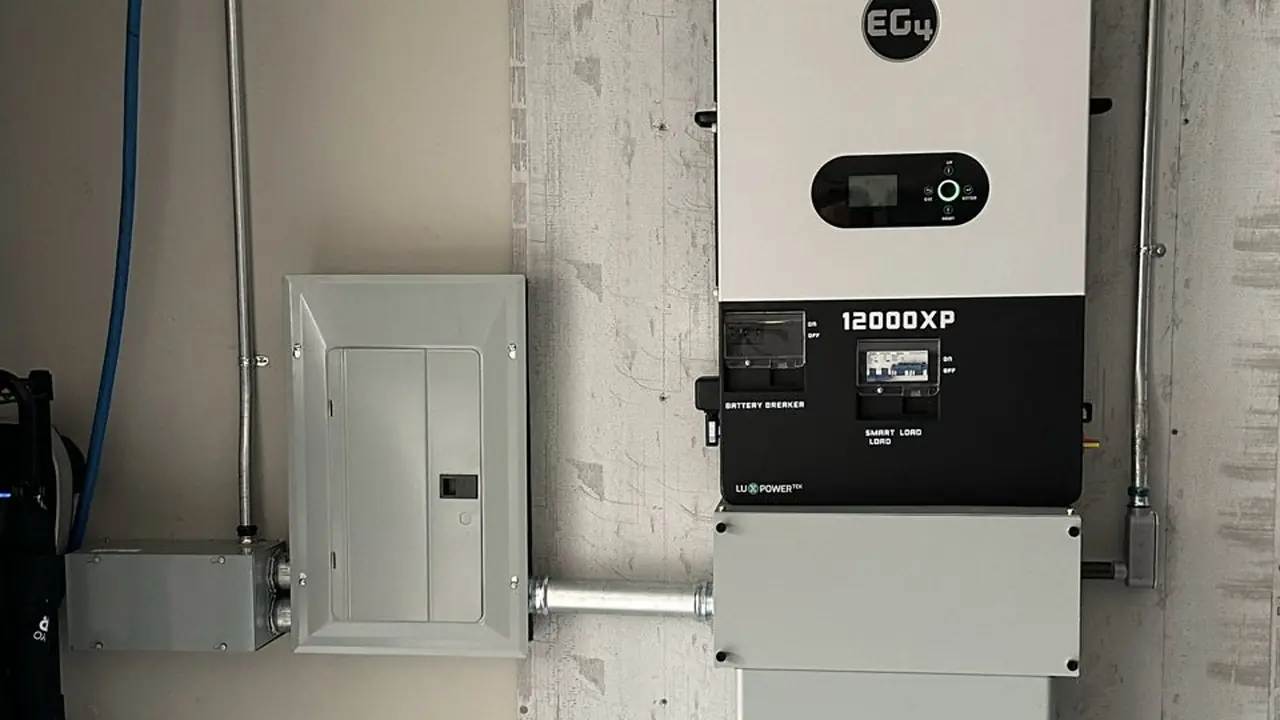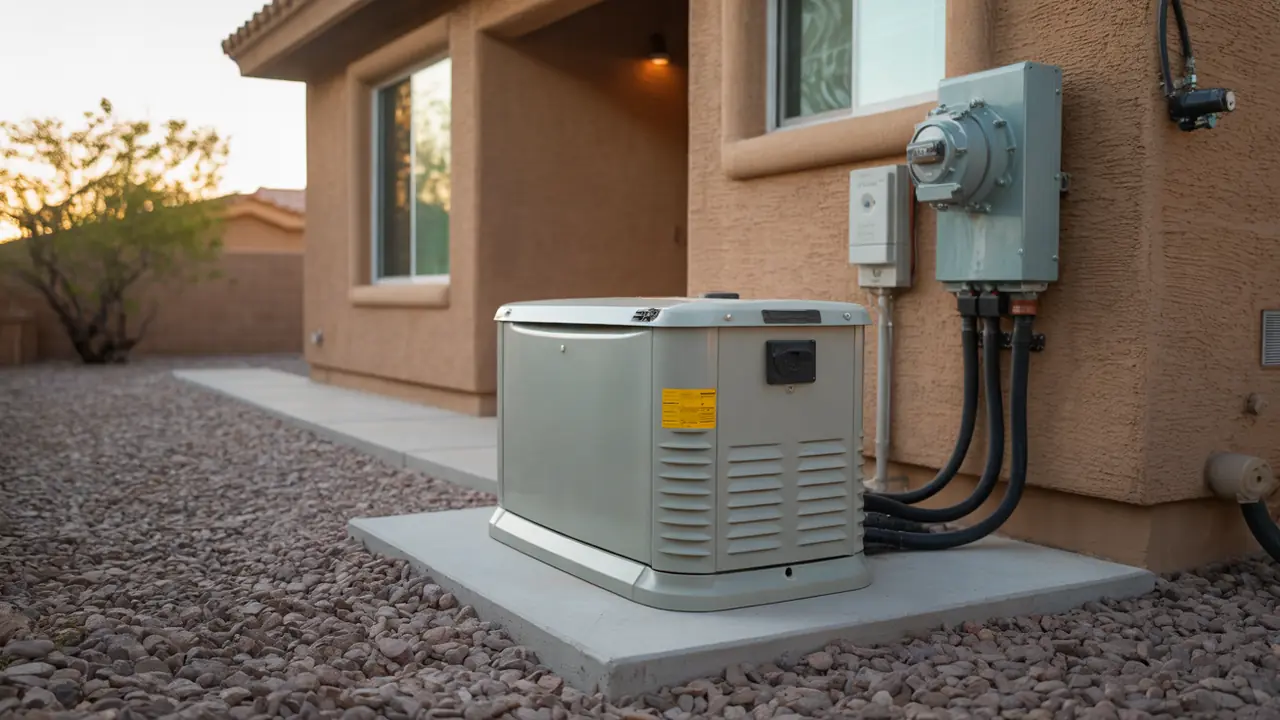
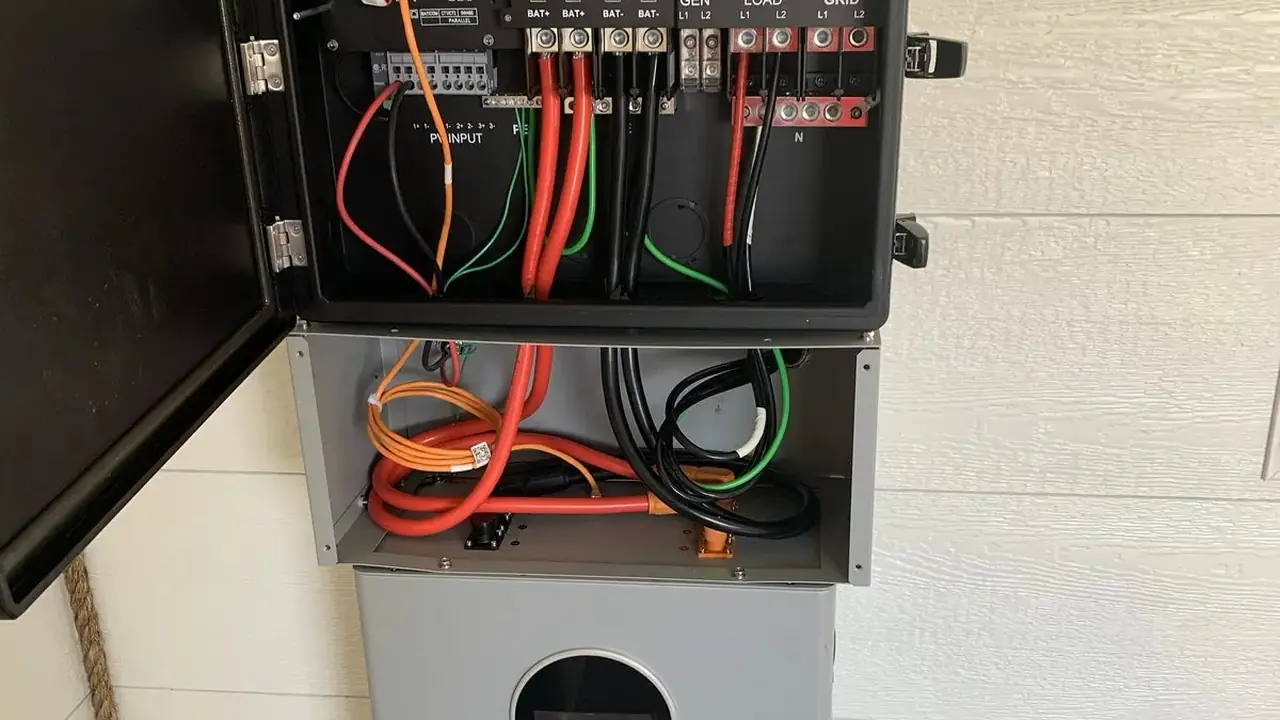
You need an electrical panel upgrade when a load calculation shows your new equipment, such as solar, a home battery, an EV charger or a mini split, would push the home past what the panel or service can safely carry, or when the panel itself is old, damaged or a known problem model. Many Arizona homes do not need one: a measured load calculation, circuit sharing or a smart panel can often make room instead.
Key takeaways
- Start with a load calculation, not an upgrade. The National Electrical Code has methods that use your actual metered load.
- Residential panels typically range from 100 to 400 amps, and the NEC requires a service of at least 100 amps, per the U.S. Department of Energy.
- Physical space and electrical capacity are different problems. A full panel may only need a subpanel.
- Some panels should be replaced anyway. Fuse boxes and certain older brands are flagged as unsafe.
Table of contents
- What does an electrical panel actually limit?
- When does an Arizona home need a panel upgrade?
- How does a load calculation work?
- What are the alternatives to a panel upgrade?
- What does an upgrade involve in Arizona?
- What are the signs a panel needs attention?
- Subpanel, new panel or service upgrade: what is the difference?
- How do you read your panel label?
- Get a load calculation first
- Frequently asked questions
What does an electrical panel actually limit?
A home's panel and service set the maximum power everything can draw at once. A U.S. Department of Energy guide to electric panel upgrades explains that panel size is set by the main breaker's current rating, typically 100 to 400 amps, and that many newer homes have 150 or 200 amp panels while older homes often have 100 amps. You can find the rating on the meter label, the panel label or the main breaker itself.
There is also physical space. A panel can have plenty of capacity and no open breaker slots, which is usually solved with a subpanel rather than a new main panel.
When does an Arizona home need a panel upgrade?
The common triggers here are large new loads:
- Solar. The panel's busbar rating limits how much solar can back-feed it, so some systems need a different connection method, a main breaker change or a new panel.
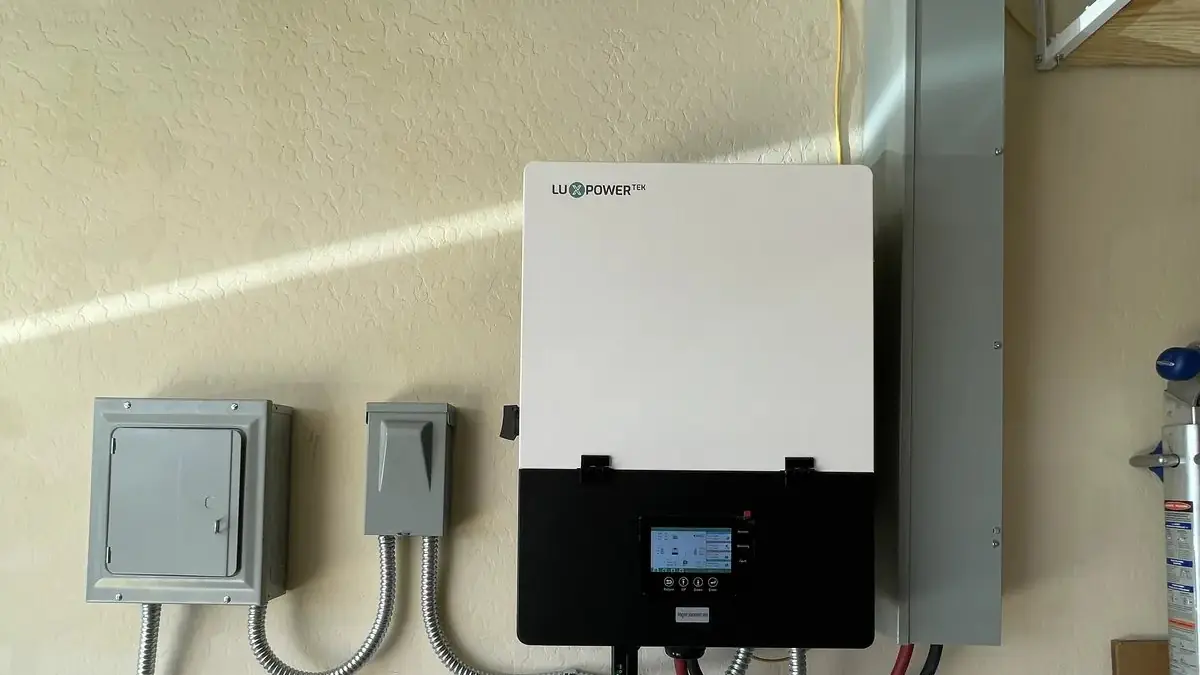
- A home battery. Battery backup usually means moving essential circuits to a critical loads panel, and the main panel needs room for that; our guide to battery backup sizing covers which circuits.
- An EV charger. A Level 2 charger is a large continuous load.
- Cooling. A new central AC, heat pump or solar mini split adds to the summer load that already dominates Arizona homes.
- Age and condition. ENERGY STAR material from Lawrence Berkeley National Laboratory flags fuse boxes and certain older panel brands, including Zinsco and Federal Pacific, as dangerous and worth replacing.
How does a load calculation work?
The National Electrical Code, published as NFPA 70, sets the methods. An ENERGY STAR and LBNL presentation summarizes two of them for existing homes:
- Metered data (NEC 220.87). Take the home's highest measured demand over a year, multiply it by 1.25, and add the new load.
- Connected loads (NEC 220.83). Count 100% of the first 8,000 watts of existing load plus 40% of the rest, adding the larger of heating or cooling when new HVAC is part of the job.
If the result fits the panel and service, the panel stays. The same presentation notes that utilities report solar and EV charging as the main drivers of panel and service changes, and that some upgrades happen only because simpler methods were used instead of these code paths.
Two code paths that decide if a panel stays
Under the National Electrical Code, an existing home can use a year of metered data (NEC 220.87) or a connected-load calculation (NEC 220.83). If the result fits the panel and service rating, typically 100 to 400 amps, no upgrade is needed.
NEC 220.87 Metered data
- Highest demand over a year
- × 1.25
- + the new load
NEC 220.83 Connected loads
- 100% of the first 8,000 W
- + 40% of the rest
- + larger of heating or cooling, if new HVAC
What are the alternatives to a panel upgrade?
| Option | What it does |
|---|---|
| Measured load calculation | Uses a year of real demand data and often shows more headroom than a rule of thumb |
| Circuit sharing | Lets two large loads, such as a dryer and an EV charger, share one circuit, one at a time |
| Circuit pausing | Turns a load off automatically when the home nears its rated capacity |
| Smart panel | Monitors and manages circuits so large loads do not peak together |
| Lower-power appliances | A smaller charger or a 120 V heat pump water heater adds less load |
Batteries can help too. A home battery with its own inverter can carry essential loads in an outage without enlarging the service, and on APS or SRP time-of-use plans it shifts evening use away from the most expensive hours; see SRP and APS on-peak hours.
What does an upgrade involve in Arizona?
A panel replacement is permitted work done by a licensed electrician, inspected by your city or county. Increasing the size of the service also involves your utility, APS, SRP, TEP or a co-op, because it changes the meter and service conductors, so plan for their scheduling as part of the project.
On a solar or battery job, the cleanest path is one contractor for both the electrical and the energy work. Our residential electrical crew handles main panel upgrades, subpanels and EV charger circuits, and the same crew installs battery backup, so the load calculation is done once. Businesses can see our commercial electrical work.
What are the signs a panel needs attention?
Some panels announce the problem before any new equipment arrives. Call a licensed electrician if you notice any of these, and do not remove the panel cover yourself:
- A breaker that trips again right after a reset. That points to an overloaded circuit or a fault on it, not a bad breaker.
- Heat, buzzing or a burning smell at the panel or an outlet. Turn the affected circuit off and treat it as urgent.
- Lights that dim every time the AC compressor or another large load starts.
- A fuse box or a flagged brand. The ENERGY STAR and LBNL material lists fuse boxes, Zinsco and Federal Pacific panels among those worth replacing.
- No open slots, with new circuits squeezed in through add-on breakers or extension cords doing a circuit's job.
None of these on its own decides the size of the fix. A full panel may only need a subpanel, while a warm one needs the cause found first.
Subpanel, new panel or service upgrade: what is the difference?
The three get called a "panel upgrade" interchangeably, but they are different jobs with different paperwork.
| Job | What changes | Utility involved? |
|---|---|---|
| Subpanel | A second panel fed from the main adds breaker space near new loads, such as a garage, casita or battery | Usually not |
| Main panel replacement | A new panel replaces an old, damaged or full one, often at the same service size | Sometimes, if the meter must be pulled |
| Service upgrade | The amperage coming into the home increases, which changes the meter and service conductors | Yes, the utility schedules its part |
A critical loads panel for a battery is a kind of subpanel: the circuits you choose move into it so the battery can carry them in an outage.
How do you read your panel label?
Open the outer door only, never the inner cover. The label inside, or on the door, usually lists the manufacturer, the model, and the busbar rating in amps. The main breaker, normally at the top, shows the service rating. The DOE guide notes the rating can also be read on the meter label. Take a photo of the label, the main breaker and the full row of breakers; that is most of what an electrician needs to start a load calculation, and it tells us whether solar back-feed limits on the busbar will shape the design.
Get a load calculation first
Tell us what you want to add and send a photo of your panel label. A licensed electrician will run the load calculation and tell you whether the panel stays. Start with Build & Price, call (602) 704-4648, or send us a message.
Frequently asked questions
How do I know if I need a panel upgrade?
A load calculation tells you. An electrician totals your existing load, or uses a year of your metered data, adds the new equipment and compares the result with your panel and service rating. Old, damaged or recalled panels are a separate reason to replace one regardless of capacity.
Can I add solar or a battery without upgrading my panel?
Often, yes. It depends on the panel's busbar and main breaker ratings, how the solar connects and whether there is room for a critical loads panel. A load calculation and a look at the panel answer it before anything is quoted.
What are the alternatives to a panel upgrade?
ENERGY STAR and Lawrence Berkeley National Laboratory point to measured-load calculations under the National Electrical Code, circuit sharing devices, circuit pausing, smart panels and lower-power appliances. Each one avoids adding capacity by managing when loads run.
Sources
- U.S. Department of Energy: Home electrification and electric panel upgrades
- ENERGY STAR and LBNL: Reducing the cost of electrification with alternatives to electric panel upgrades
- NFPA 70: National Electrical Code
About the author
Nirvana Energy is an Arizona solar, battery and electrical contractor based in Gilbert, licensed and bonded under ROC 357597, CR-11 Electrical. Our masters-licensed crew does panel upgrades, subpanels and EV charger circuits alongside solar and battery installs. Learn more about Nirvana Energy.